Introduction
Modern enterprise IT is hybrid and relies on data from on-premises and the cloud. BizTalk is the best suit integration for On-Premises integration tools as well as IaaS (Infrastructure as Service). It also Integrates Cloud Services with built-in adapters for cloud, Logic Apps to On-Premises Gateway. Azure Logic Apps, Service Bus Queues and Topics provide a great way to extend your integration scenarios and capabilities to the cloud.
Logic Apps Tasks Configuration
Let us consider a scenario, during BizTalk Application deployment you may need to stop all the integrated Logic Apps, and significantly the same need to be started once after the deployment. And also, there is a chance the executions of the Azure Logic Apps might succeed or fail, and the failed logic app run may need to resubmit at some point in time. These activities can be done without manual intervention using BizTalk360 Automated Logic Apps Task.
Automated Logic Apps tasks allow you to automate the below actions
Enable
Disable
Run Trigger
Resubmit Runs
Follow below steps to configure Logic Apps automated task:
To configure Logic Apps Task navigate to Environment Settings->Automated Tasks ->New Task Configuration->Select Logic App which will open the task configuration blade
Add the Task Name and Description
Azure Subscription - Select the Subscription from the list which holds the respective Logic Apps
The Azure Subscription must be configured in BizTalk360 before accessing the Logic Apps in Automated Task. Follow this article to add the Azure subscription to BizTalk360
BizTalk360 will not take any action on the Logic Apps if the Azure subscription is in the suspended or disabled state.
Resource Type - Select the Resource type as Logic Apps.
Logic Apps -Select the Logic Apps from the list to take an action. Multiple Logic Apps can be selected to perform the same operations
Logic App Action -Select which action needs to perform Enable/Disable/Run Trigger/Resubmit Runs. To perform Resubmit Action few more configurations need to be done as mentioned below,
Resubmit Runs- Provide the duration (in minutes) to pick the runs which have failed in that period. Eg: the last 15 minutes. Optionally you can also provide the below information to resubmit the runs
Provide the failure reason. So that only that particular failed runs will be resubmitted.
Select the triggers, to submit the failed runs in that trigger.
Select the Run Actions and the status. The runs with the selected run action and the selected status will be resubmitted
Task Execution Settings
Enable/Disable Task: By default, the task execution will be enabled. You can disable it if needed which stop the execution.
Skip During Maintenance: Enable this option to prevent the task from executing during the maintenance period.
Run Immediately: Enable this option to run the task immediately after saving the configuration. However ,the task will also execute at the scheduled time.
Follow this article for Schedule Configuration
Notification Configuration - Enable the channels you wish to get notified about the actions performed on Logic Apps
On successful task configuration, you can see the task in the configuration grid along with the task name, resource type, resource details, Action, Schedule type, and Next execution time.
.gif)
Service Bus Queues and Topics Task Configuration
User can manage Queues and Topics states through scheduled execution.
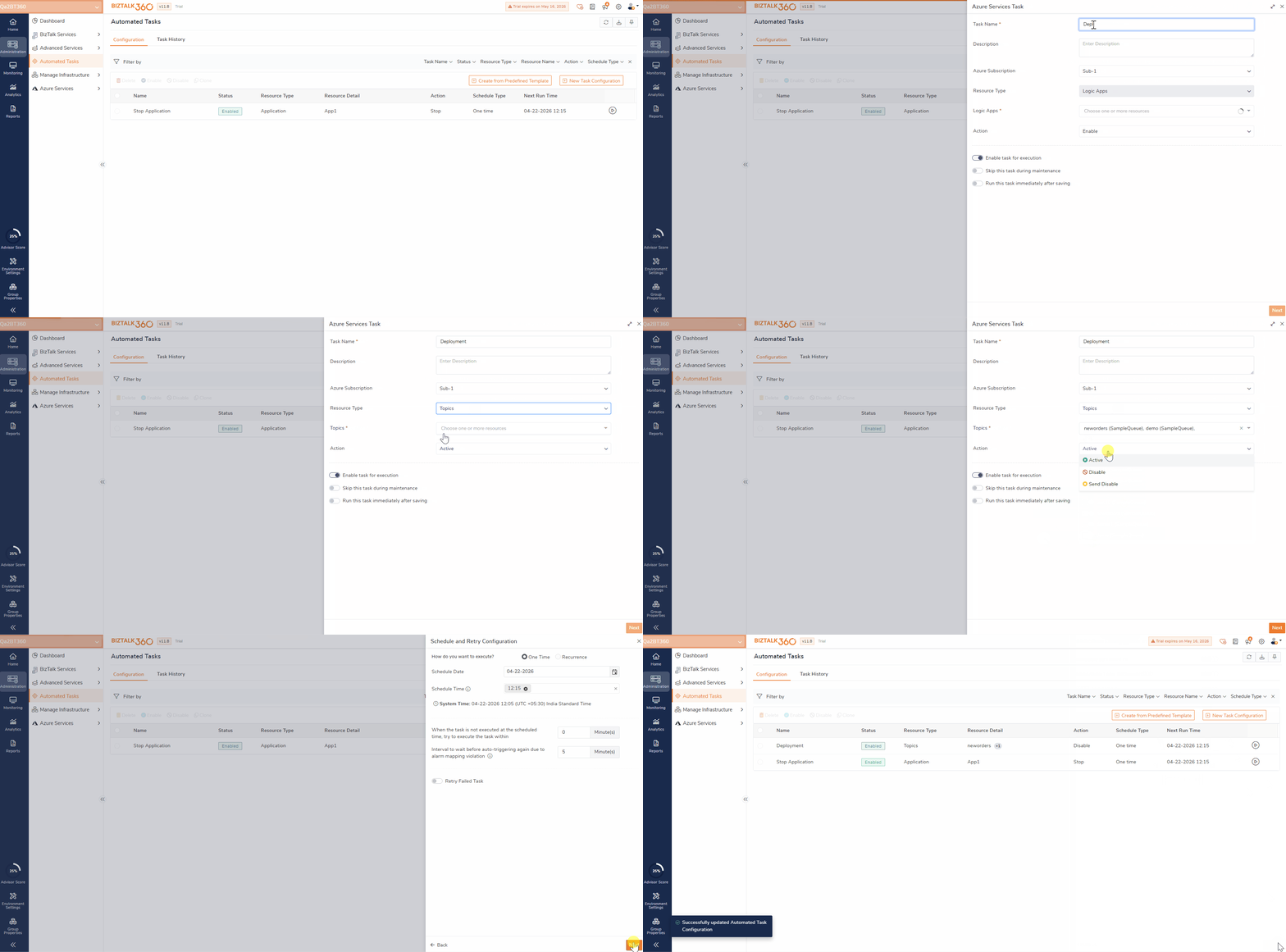
Consider a scenario where BizTalk integrations depend on Azure Service Bus queues and topics for message processing.During application deployment or maintenance, queues/topics may need to be disabled to prevent message inflow Once deployment is complete, they must be enabled again. In some cases, queues or subscriptions may need to be restarted or managed periodically
With Azure Service Bus Automated Tasks, these operations can be scheduled and executed automatically.
Automated Service Bus tasks allow you to automate the below actions
Queues – Active, Disable, Send Disable , Receive Disable
Topics -Active, Disable, Send Disable
Steps to Configure Azure Service Bus Automated Task
Navigate to Environment Settings → Automated Tasks → New Task Configuration and select Azure Services to open the task configuration panel.
Provide basic configuration such as Task Name and Description.
Azure Subscription - Select the Subscription from the list which holds the respective Service Bus entity
Resource Configuration
Resource Type: Select the Resource Type as Service Bus (Queues or Topics) . This is a single-select option, meaning you can choose only one type (Queues or Topics) per task. To manage both queues and topics, configure separate tasks.
Resources : Based on the selected resource type:
If Queues is selected, all queues from the chosen subscription will be listed. If Topics is selected, all topics will be listed
This field supports multi-select, allowing you to choose one or more resources.
Action :Select the action to be performed on the selected resources, such as:
Enable (Active)
Disable
Task Execution Settings
Enable/Disable Task By default, the task is enabled. You can disable it to stop execution.
Skip During Maintenance- Enable this option to prevent execution during maintenance windows.
Run Immediately- Enable to execute the task immediately after saving. The task will also run as per the configured schedule.
Schedule Configuration- Configure the schedule (daily, weekly, or custom) based on your requirements.
Notification Configuration -Enable the required notification channels to receive updates on task execution (success/failure).